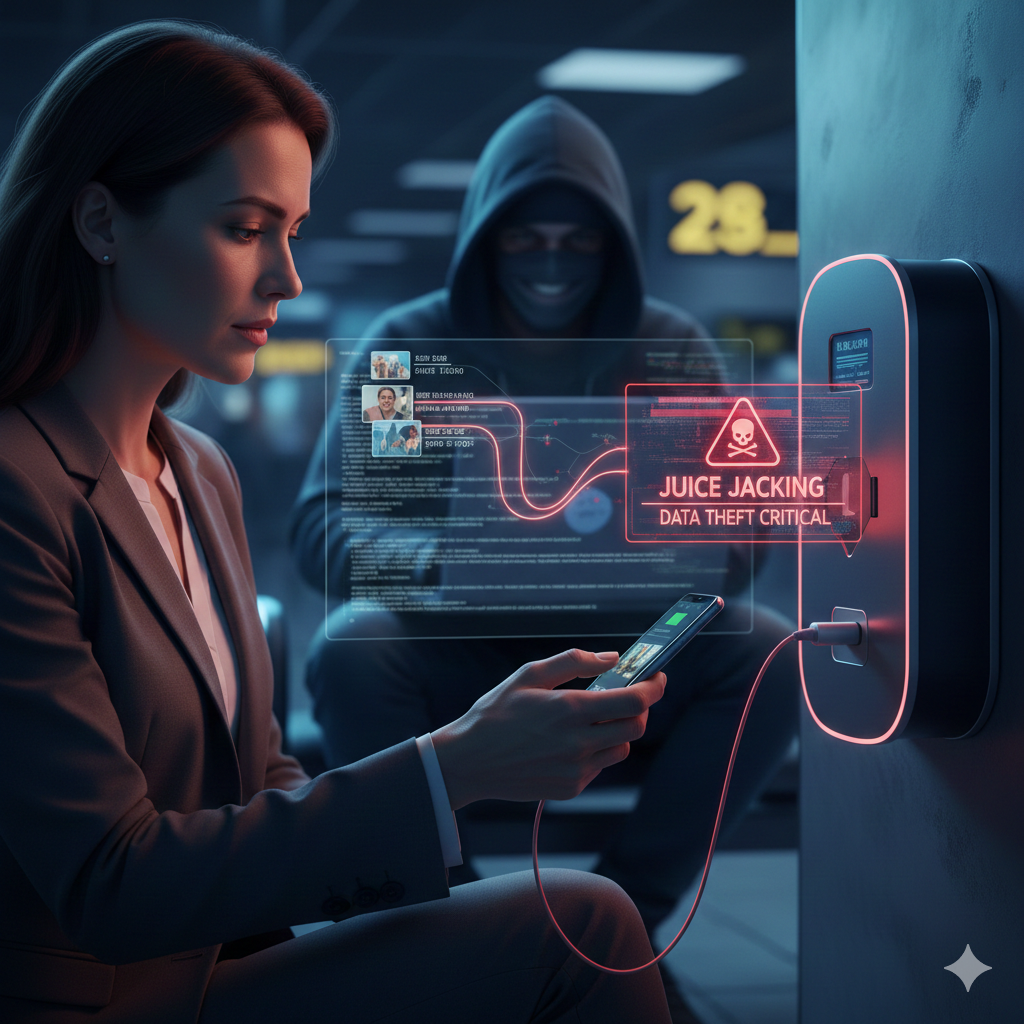

Do you charge your phone at airports, cafes, or other public places? Then this post of The Safe Side is for you. We break down how juice jacking works and what you can do to stay safe.
We’ve all been there: your phone is on 5%, you’re miles from your charger, and then you spot it – a glorious, glowing public charging port. A savior in your moment of digital despair! But hold that thought. While these seemingly convenient hubs are designed to be helpful, plugging into a public charging station or using an unknown USB cable can turn your travel convenience into a serious cybersecurity nightmare.
The truth is, those public ports aren’t always as innocent as they appear. They can be breeding grounds for something called “juice jacking,” a term that sounds like it belongs in a sci-fi movie but is a very real threat.
What is Juice Jacking?
Think about how a normal USB connection works. It doesn’t just deliver power; it also allows for data transfer. When you plug your phone into your computer, you can usually choose whether to charge only or to access files. Public charging ports, however, might not give you that choice, or they might be tampered with to bypass your settings.
Juice jacking is a type of cyber attack where hackers modify a public charging station or a USB cable to secretly install malware on your device, or even worse, steal your data directly. Your phone, tablet, or laptop becomes an open book, vulnerable to:
- Data Theft: Your photos, contacts, emails, banking information, and passwords could be siphoned off without your knowledge.
- Malware Installation: Malicious software could be installed, allowing hackers to monitor your activity, remotely control your device, or even lock you out of your own data (ransomware).
- Device Corruption: In extreme cases, malware could damage your device’s operating system, rendering it unusable.
The Risks Are Real
Cybersecurity experts have been warning about juice jacking for years, and it’s not just theoretical. There have been documented cases where charging stations were found to be compromised. Airports, train stations, cafes, and even hotels can host these vulnerable ports.
The problem is, there’s no visual cue to tell you if a charging port has been tampered with. It looks like any other USB port, quietly waiting for its next victim.
How to Protect Yourself
So, does this mean you should travel with a dead phone? Absolutely not! There are several simple precautions you can take to stay charged and secure:
- Carry Your Own Charger and Wall Adapter: The safest option is always to use your own charging brick plugged directly into a wall outlet. This ensures only power is transferred, not data.
- Invest in a Portable Power Bank: A good quality power bank is your best friend when traveling. Charge it up before you leave, and you’ll have portable power whenever you need it, without relying on public infrastructure.
- Use a “Charge-Only” USB Cable (Data Blocker): These special USB cables are designed to physically block the data pins, allowing only power to flow through. They are an inexpensive and effective layer of protection when you must use a public port.
- Keep Your Device Locked: Even if you accidentally plug into a compromised port, keeping your device locked can prevent immediate data access, though it’s not foolproof against all malware.
- Disable Data Transfer: Some devices allow you to set your USB connection to “charge only” by default or prompt you when you plug in. Always select the “charge only” option if available.
- Avoid Using Unknown USB Drives: This isn’t strictly juice jacking, but it falls into the same category of “don’t trust unknown USBs.” Never plug in a USB drive you find or are given by a stranger.
Stay Charged, Stay Safe
Traveling should be about exploration and enjoyment, not worrying about your digital security. By being aware of the risks and taking a few proactive steps, you can keep your devices powered up and your personal information locked down.
The convenience of public charging ports is tempting, but the potential cost to your privacy and security is far too high. Think twice, stay smart, and travel safe! Here’s an image to illustrate the concept of juice jacking: